
Workday Broadens Channel Ecosystem, Opening New Opportunities for Partners
Workday is actively expanding its channel ecosystem by acquiring AI companies, launching data cloud, and establishing collaborations with Microsoft and others, creating more business opportunities for partners. Partners expect these initiatives to drive revenue growth in consulting and systems integration, and to foster the development of innovative solutions based on the Workday platform.
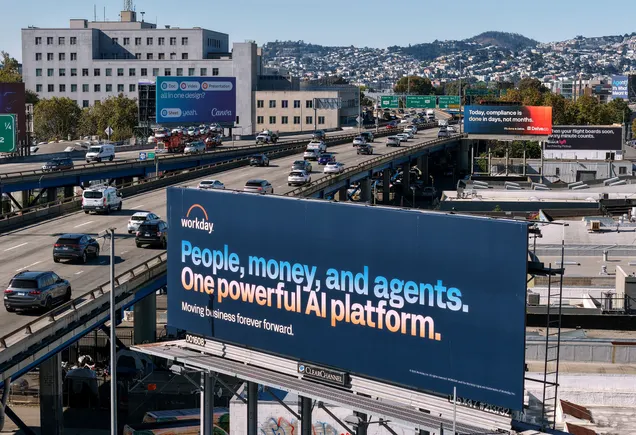
Workday's partners expect significant growth opportunities as the SaaS vendor breaks out of its core human capital management focus, adds AI capabilities, and opens its platform to more third-party products.
IT services provider executives say Workday's evolving strategy will allow customers to use the platform more flexibly—not just as a single product, but as part of an end-to-end software portfolio. This broader adoption could translate into higher revenue for consulting and systems integration projects. Partners can also create more business by layering their own products on top of Workday, as many vendors have already done with Salesforce and ServiceNow.
Over the past few years, channel partners have become increasingly important to Workday's business. As of the second fiscal quarter (ending July 31), partners contributed to its net new annual contract value bymore than 20%, compared toless than 3%。
two years ago. Here are several recent initiatives that have attracted partner attention to Workday:
- The companycompleted its acquisition of Paradoxon October 1, an AI agent company focused on candidate recruitment tasks such as application and interview coordination. The deal gives Workday a complete "talent acquisition suite," according to the announcement. Other acquisitions include Workday's Augustpurchase of Flowise(a low-code platform for building AI agents), and its ongoing acquisition ofSana, an AI search and agent vendor.
- In September, at the annual Workday Rising conference, the companyunveiled Workday Data Cloud, which shares data between Workday and other vendor platforms, including Databricks, Salesforce, and Snowflake. Additionally, Workday announced aagentic AI platform partnership with Microsoft。
- Workday has partnerships with Accenture, Deloitte, KPMG, PwC, and several other enterprise software vendors to deploy tools on its platform. AI agents built by partners can connect to Workday Agent System of Record, a governance and monitoring hub for agents.
Multi-vendor alliances
According to IT services executives who spoke with Channel Dive, Workday's recent moves open its platform to a broader range of customer needs.
Jannine Zucker, global chief commercial officer of the Deloitte Workday alliance, noted that Workday's partnerships with Salesforce and Microsoft are examples of "how openness will increase." Zucker said Deloitte will be able to work with clients more comprehensively.
PwC, meanwhile, is exploring use cases spanning Workday and Salesforce from a broader perspective. The consulting firm is building a "lead-to-ledger" service that captures sales leads in Salesforce, handles pricing and quotes, and, once an opportunity is won, records the success in the client's Workday general ledger system.
Claudio Valera, PwC's global and US Workday alliance leader, said the integration relies on having Salesforce agents "shake hands" with Workday agents on the finance side. This process can be orchestrated through PwC's agent OS, a tool that coordinates multiple agents, or using Workday's Flowise, which includes multi-agent workflow orchestration. Another PwC offering connects Workday with Guidewire's property and casualty insurance software.
"We're looking at multi-alliances," Valera said. "I view it as a solar system. Workday is the sun, and we make sure all the other planets connect around that sun." Patrick Pugh, PwC's global and US alliances leader, emphasized the importance of connectivity between platforms. "The reality is that the scale and complexity of most companies today means no single technology drives transformation," he said.
Integrations to solve complex problems
Workday's expanding ecosystem is becoming crucial as businesses seek to move beyond pilot models and think more broadly about AI return on investment. Deloitte's clients are weighing the relative advantages of Workday capabilities against other vendors' offerings, Zucker said. "Before the (September partnership announcement), the external part of Workday was more about 'how does this work with Workday?'" she said. "Now it's shifted to 'Workday will allow me to leverage external agents to work with agents inside Workday.'"
Kim Seals, senior partner at West Monroe, told Channel Dive that the Workday suite has also expanded its financial offerings to take a broader position in enterprise software, including ERP. Seals said Workday now has a "truly competitive ERP solution," noting that the ability to combine its financial and human capital management software will help the company differentiate. Seals, who leads the consultancy's Workday alliance, said clients want to integrate people, finance, and operations data to track productivity and make faster decisions. "Workday has become a more obvious solution for this than in the past," she said.
Process improvements
Against the backdrop of Workday's expanding portfolio, ecosystem partners point to several growth areas. Seals said West Monroe aims to grow its Workday-related revenue in three key areas: advisory and strategic consulting, change management and adoption support, and business process optimization. The firm has been expanding its Workday consulting team, using the vendor's alliance program to keep up with technology developments. "One of the main reasons we joined the partner program is for training opportunities and early access to product releases," Seals said.
Meanwhile, PwC finds that business process improvement opportunities stem from Workday software implementations. "Yes, the technology is critical, but (clients) really expect us to transform workforce, finance, and operations processes," Pugh said. Beyond services, partners say they can deploy their own intellectual property to expand Workday project revenue. "Workday gives us this amazing canvas to innovate and build solutions on its technology or complementary technologies," Valera said. PwC uses Workday's low-code development toolkit, Extend, to build industry-specific and cross-industry applications.
Deloitte also takes an industry-focused approach. In 2024, the firm launched a series of Workday accelerators providing preconfigured processes, data models, and workflows for healthcare, technology and media, banking, higher education, and investment management industries. Dan Sundt, human capital lead for the Deloitte Workday alliance, said such offerings help the firm align with client needs by industry or by segment within a specific industry. "This is an area where we will continue to focus and co-innovate with Workday," he said.