
TD Synnex CEO: Hardware to Become Channel Growth Engine Again Amid Rising AI Token Costs
TD Synnex CEO Patrick Zammit says rising AI token costs are driving enterprises back to on-premises deployment, and hardware is expected to become a channel growth driver again. The company's fiscal 2025 revenue exceeded $62.5 billion, and it has stockpiled inventory in advance to address chip shortages.
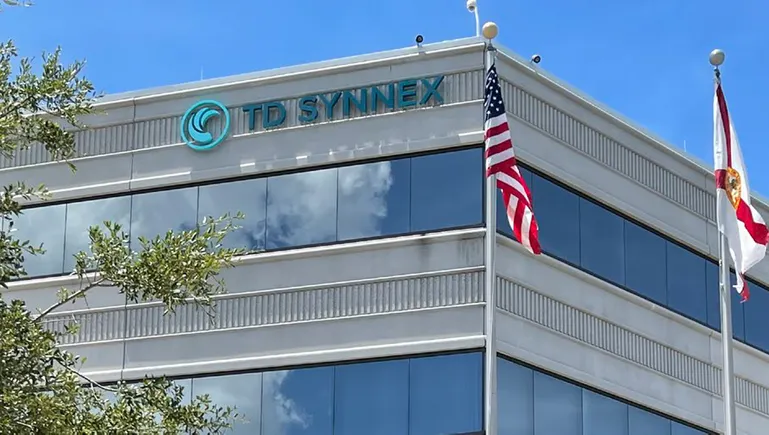
As AI adoption reshapes the partner ecosystem, TD Synnex, the largest distributor in the channel, expects an overall shift toward hardware in the industry. Amid challenges faced by major tech companies, TD Synnex has remained steady, successfully weathering tariff threats and the subsequent storage and memory chip shortages.
The company reported revenue exceeding $62.5 billion for fiscal 2025, which ended November 30. Now, as AI vendors shift from subscription services to token-based billing, TD Synnex CEO Patrick Zammit sees the market moving toward on-premises infrastructure.
"I now think hardware could become attractive again," Zammit told Channel Dive, noting rising token costs in cloud and SaaS applications. "AI is becoming a threat to software but an opportunity for hardware. Enterprises are seeing AI costs surge, and the best way to mitigate that is on-premises infrastructure."
TD Synnex has so far successfully navigated the chip crisis. In the three months ending February 28, its quarterly revenue benefited from higher PC prices and rising costs for servers and networking equipment, driving revenue to record levels.
"IT is a complex industry," Zammit said. "Shortages can negatively impact unit sales because you can't get products; meanwhile, rising average selling prices have a positive effect. But the risk is that if average selling prices rise too much, unit sales will decline because customers won't buy at high prices."
Analysts predict component shortages will persist through the end of 2027, and Zammit believes this presents potential opportunities for distributors and their channel partners.
However, expanding internal data centers, managed capacity, and edge device capabilities requires capital investment—a daunting task amid fluctuating procurement costs. To cushion the impact, some service providers have turned to a time-tested strategy: warehousing and stockpiling.
CBTS, a Cincinnati-based managed service provider and value-added reseller, began stockpiling hardware in May to buy customers time to get deals approved before prices rose.
TD Synnex also began increasing inventory investments late last year.
"We started buying PCs, servers, and everything else in November, and we'll continue doing so," Zammit said. "Price increases are a nightmare—this is one of the worst we've seen. Suppliers have had to react quickly, and the prices quoted by resellers have essentially become obsolete."
Mixed Market Signals
According to a recent report from Westcon-Comstor, the turmoil caused by chip shortages is pushing buyers in two different directions. The distributor surveyed more than 100 members of its partner community. Over half of respondents said customers have accelerated hardware purchases, while nearly a quarter reported delayed or canceled purchases.
IT service providers said they are helping customers postpone hardware refreshes by optimizing storage to reduce random access memory needs and migrating workloads to managed services. Nearly half of respondents said they are willing to switch vendors.
TD Synnex is relying on its broad product portfolio to support its business.
"We bet years ago on becoming an end-to-end distributor," Zammit said. "Our resellers need to deliver business outcomes, so all technologies matter. The diversified portfolio is already paying off."
Amid distribution channel consolidation, the company has maintained and expanded relationships with major vendors. Key vendors, including Dell, Microsoft, and Broadcom through its acquisition of VMware, have reduced the number of partners, favoring large distributors with global reach.
"We're seeing many vendors rethinking their go-to-market strategies, reducing the number of direct resellers and distributors, with a clear preference for global partnerships," Zammit said, noting that Dell recently removed Arrow Electronics from its distribution list.
In May, HPE took a similar step, consolidating most of its distribution channel with two global vendors: TD Synnex and Ingram Micro. Arrow remains an HPE distributor in the Americas and EMEA.
"We are building a simpler, more scalable model to support the long-term success of partners and customers," said Simon Ewington, HPE's senior vice president of channel and partner ecosystem, in a press release. Ewington added that HPE distribution will be complemented by a mix of regional and specialty distributors.
"This is a trend," Zammit said. "It's not just HPE—you'll see more vendors doing this."
Note: This story has been updated to include details about Arrow Electronics' relationship with HPE.