
Microsoft licensing model changes spark channel battle for mid-market
Microsoft's E7 365 suite launched at $99 per user per month, but economic uncertainty makes customers cost-sensitive, and large value-added resellers (VARs) and licensing solution providers (LSPs) are actively vying for small and medium-sized business (SMB) and mid-market share, triggering channel conflict.
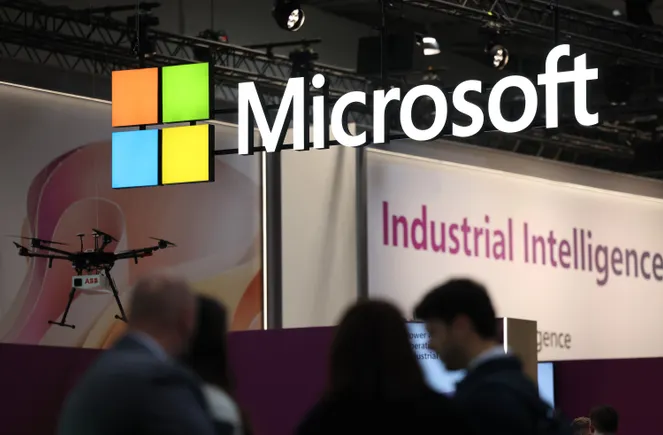
The world's largest Microsoft value-added resellers (VARs) are eyeing the midmarket as the IT giant adjusts its licensing model and customers tighten budgets.
Microsoft's E7 365 software suite, launched earlier this month, offers an annual subscription of $99 per user per month, integrating productivity tools, Copilot, security features, and a new agent management tool. For some Microsoft resellers and support partners, this price is hard to sell amid economic uncertainty. Customers are pushing resellers to compete against each other as finance executives pressure CIOs to control budgets and offset software price increases.
"Customers struggle to understand why prices are rising so fast, so many are now actively seeking quotes from other partners for licensing," Sherweb sales executive Michael Slater told Channel Dive.
Cost anxiety is creating opportunities for Microsoft Licensing Solution Providers (LSPs)—a group of large partners with privileges to sell subscriptions through Microsoft Enterprise Agreements (EAs) and registrations. LSPs can leverage their unique channels, enjoy volume discounts, and bundle other products to save small and medium-sized businesses money.
"It's definitely a challenge. We see companies like CDW entering the 50-60 seat market, trying to drive prices down," said Ted Brown, director of product management at Ntiva.
Meanwhile, some traditional MSPs (managed service providers) are also ambitiously targeting larger customers, sparking a scramble in the midmarket.
"This is causing channel conflict in the midmarket, especially in the EA segment," Slater said.
For SHI—a $16 billion revenue solution provider and LSP—this trend is a natural outcome of larger factors.
"We see movement in the channel, but I don't think SHI's strategy is to move downmarket in the traditional sense," said Joe Bellian, vice president of Microsoft alliances and programs at SHI.
Changes to Microsoft's business model are prompting SHI to begin serving small businesses. Last fall, Microsoft eliminated key discounts that enterprises received when directly purchasing EAs. Microsoft is also broadly pushing customers to buy licenses through Microsoft CSPs (Cloud Solution Providers), forcing LSPs to engage with them in the customer's purchasing process.
"Our approach isn't about chasing market segments, but rather aligning with customers where they are in their lifecycle," Bellian said.
Some customers want a single purchasing partner rather than buying hardware and software separately. Given E7's emphasis on combining security and AI, Bellian said it makes sense to use a single partner for strategic guidance.
"This simplifies the procurement process while reducing friction between their security, AI, and identity investments," Bellian said.
SHI's strategy aligns with the "orchestrator" role that CDW CEO Chris Leahy highlighted in a recent earnings call. Leahy said customers are shifting from self-service and specialist buyers to large partners that can integrate multiple technologies.
"AI adds complexity, and value is shifting from access to execution quality, depth, and comprehensive end-to-end solutions. This shift reinforces the relevance of our model across all customer end markets—small, midmarket, and enterprise—and expands our opportunity set, which is further strengthened by our recent resource market alignment," Leahy said.
The price game
Large VARs claim an edge in AI orchestration, while competitors call it pricing arbitrage.
"Over the past two or three years, pricing pressure has been constant because large distributors enter the market with low prices," Brown said. "They may capture most of the incentives on the backend."
Slater said that in tight economic times, small and medium-sized businesses may want to consolidate partners. Memory chip shortages once benefited large VARs with strong supply chains. Once they gain small and mid-sized customers through hardware sales, large resellers can extend their advantage into software.
"If I were a sales leader at an LSP, selling to existing customers is easier than finding new ones," Slater said.
Customers are also learning how to play the price game. Many have heard about the generous discounts available through EAs and will try to get quotes directly from Microsoft. Then, companies will bounce between Microsoft and CSPs to negotiate better pricing.
"Microsoft does step in, but once a deal is in process, it's very difficult to pull back," Slater said.
Deep consulting and high-touch services can help small MSPs and resellers fend off larger competitors.
"You have to leverage your understanding of customer value. If you only offer licensing value, then anyone can take that business away," Brown said.
As a CSP, Opkalla has flexibility in matching discounts, but the consulting firm aims to win with personalized service. That's what large partners lack, said John Fread, Microsoft practice director at Opkalla.
"If they say they're using an LSP, we know exactly what their frustrations are. In the end, most issues boil down to service support," Fread said.
For customers with no more than 100 employees, the savings potential from consolidating partners isn't worth it, said Jay Dixon, founder of Criterion Consulting.
"Some people like to say 'one throat to choke,' but I like to say 'one back to pat.' For them, the amounts aren't big enough that they'd care," Dixon said.
Small businesses are most likely to benefit from AI and automation as well as overall cost control.
"I think the market favors lean enterprises," Slater said. "Especially lean enterprises that rely on the cloud."